All-on-4 in Dallas–Fort Worth: Cost, Process & Who It’s For
Four implants, one fixed arch of teeth, placed in a day. DFW is one of the most affordable big markets in the country for All-on-4 — here are its published prices, how the treatment unfolds, and how to judge a quote.
All-on-4 is the treatment that changed full-mouth dentistry: four implants support a complete arch of fixed teeth — no denture adhesive, no palate covering, no removing your teeth at night. Dallas–Fort Worth has become one of the most affordable places in America to get it, with multiple centers publishing prices and competing for the same patient. Here is what it costs here, how the treatment actually unfolds, and how to tell a strong DFW quote from a weak one.
All-on-4 cost in Dallas–Fort Worth
| Per arch | Both arches | |
|---|---|---|
| DFW published range | $12,000–$25,000 | $24,000–$50,000 |
| Examples | FastNewSmile (Dallas & Fort Worth) publishes $14,000–$25,000 per arch; high-volume networks publish fixed arches from ~$12,000; Dallas All-on-4 Center (Irving) advertises full-mouth treatment from $19,000–$24,400. | |
| National chain published range | $14,000–$36,000 | $28,000–$60,000+ |
The spread inside DFW is mostly materials and what’s bundled. A lower quote may pair acrylic teeth with a one-year warranty; a higher one may be monolithic zirconia with a long warranty, sedation and all extractions included. Neither is automatically the better buy — but they are not the same product, and only the itemized written quote lets you compare them honestly.
How the treatment works
Step 1 — Consultation and 3D planning
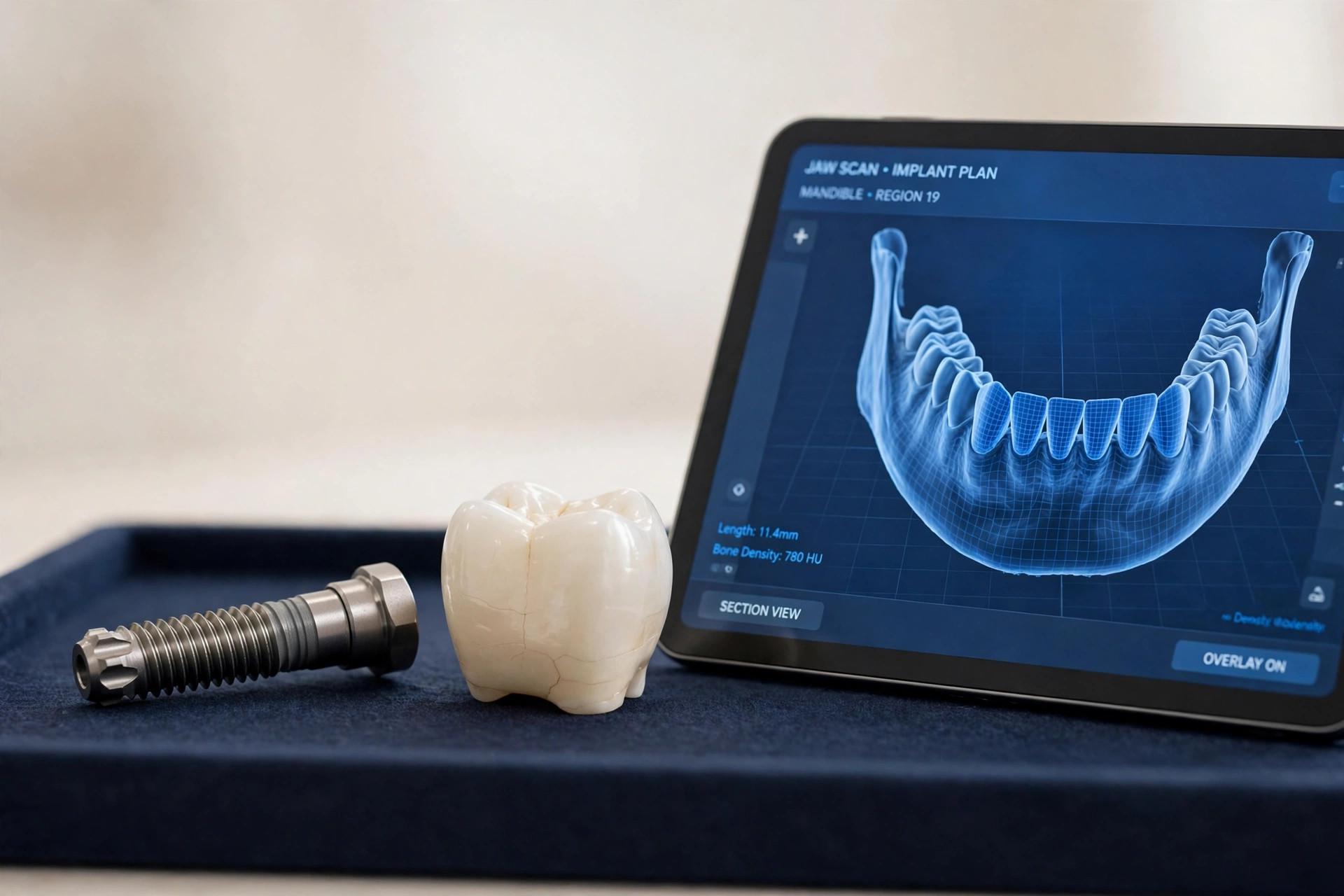
A CBCT 3D scan maps your bone. The surgeon plans implant angles on screen — All-on-4’s signature move is tilting the two back implants, which often avoids bone grafting and uses the denser bone at the front of the jaw. Most DFW implant centers include this consultation free.
Step 2 — Surgery day: teeth in a day
Remaining failing teeth are removed, four implants are placed, and a fixed temporary arch is attached the same day (occasionally within 24–48 hours). You go home with teeth. Sedation is standard practice in this metro’s implant centers.
Step 3 — Healing, 4–6 months
The implants fuse with the bone (osseointegration). You eat soft foods, keep the temporary clean, and check in periodically. This is the phase that determines how long your result lasts — rushing it is false economy.
Step 4 — Final teeth
Your permanent arch is milled — most often zirconia for strength and appearance — fitted, adjusted, and torqued down. From here it’s normal life: eat, speak, and smile with fixed teeth, with hygiene visits twice a year.
Who All-on-4 fits — and who it doesn’t
All-on-4 fits people who have lost, or are about to lose, most teeth in an arch, and people whose dentures have become a daily negotiation with adhesive and sore spots. It also fits many patients told years ago they “don’t have enough bone” for implants — the angled-placement design exists precisely for them.
It fits less well when only a few teeth are failing (fix the few — see our single implant vs full arch guide), when bone loss is extreme enough to need grafting first, or when health factors make any surgery unwise right now. A reputable DFW center will tell you if you’re in the second group — the free scan makes the answer objective.
Living with All-on-4: the first year and beyond
The brochure version ends at the final teeth; the real treatment continues in your habits. Expect a soft-food period of roughly 8–12 weeks while the implants integrate — eggs, fish, pasta, and cooked vegetables rather than steak and ice. Hygiene changes permanently and for the better: no nightly soaking cup, but a water flosser under the arch, interdental brushes, and professional cleanings two to four times a year become the routine that protects a five-figure investment. Most DFW centers include the first stretch of follow-up visits in the treatment price; confirm the schedule before surgery, not after.
Longevity is the honest selling point of the design. The implants themselves, once integrated, can serve for decades — published long-term survival for full-arch implant treatment is high when maintenance happens. The parts that wear are the teeth and their components: acrylic arches may need refurbishment in 5–10 years, zirconia lasts considerably longer, and small items (screws, attachments) occasionally need service. Ask your center what year-five maintenance typically costs their patients — the answer tells you how they think about the relationship.
Five questions to ask any DFW All-on-4 quote
- Are the final teeth zirconia or acrylic — and is the temporary fixed or removable?
- Are extractions, sedation, the scan, and follow-up visits inside this price?
- What warranty covers the implants and the teeth, in writing?
- How many arches does this surgical team place in a typical month?
- If an implant fails in year one, who pays for the redo?
Then get the full number in writing. That is exactly what our form arranges: one DFW practice, one free consultation, one exact written quote.
Common questions
How much does All-on-4 cost in Dallas–Fort Worth?
DFW practices publish All-on-4 style full-arch prices from about $12,000–$25,000 per arch; both arches together commonly run $24,000–$50,000, and at least one Irving center advertises full-mouth treatment from $19,000–$24,400. The national chain published range is $14,000–$36,000 per arch, so DFW sits at the affordable end of the country.
Do I really get teeth the same day?
Yes — a fixed temporary set, screwed onto the implants on surgery day, in the standard All-on-4 workflow. You leave with teeth that look and function like real ones (on a soft diet while you heal). Your final, stronger teeth — usually zirconia — are made after 4–6 months of healing.
Who is not a candidate for All-on-4?
All-on-4 needs enough jawbone in the right places; severe bone loss may call for grafting or additional implants instead (All-on-6). Uncontrolled diabetes, heavy smoking, and certain medications also affect candidacy. The 3D scan at consultation answers it definitively — which is why quotes before a scan are guesses.
All-on-4 vs snap-on dentures — what's the difference?
All-on-4 teeth are fixed: only the practice removes them, and they feel closest to natural teeth. Snap-on (implant-retained) dentures clip onto 2–4 implants, come out at night for cleaning, and cost roughly half as much. Many DFW patients start snap-on and upgrade later; the implants can often be reused.
Skip the guessing. Get the exact number.
Five questions, one local practice, one exact written quote — implant, abutment, crown and fees, in writing, at a free consultation.
Reveal My Estimate →