Dental Insurance & Implants in Dallas–Fort Worth: What Plans Actually Cover
Many DFW plans do cover implants — as a major service, at a percentage, under an annual cap built for smaller work. How the coverage really pays out, and the legal moves that stretch it further.
Get an exact price for your implants.
A few quick questions, and one local practice sends you a written quote.
Five quick questions. Your answers go to one implant practice in your area — and your estimate comes back as an exact written quote from that practice, not a made-up range.
How this works
- Answer five questions — they tell the practice whether you need one implant or a full arch before anyone picks up a phone.
- One local practice gets your request. Not a marketplace, not a bidding list — one practice in your area.
- You get an exact written quote at a free consultation — implant, abutment, crown and fees in writing, before you decide anything.
Why no instant price?
Calculator sites invent a range from your clicks. We don't. The same mouth can price thousands apart depending on bone, extractions and the teeth you choose — so your estimate is a real quote from the practice that will do the work, with a 3D scan behind it. That is the number you can actually plan on.
Free · No obligation · We never sell your information. Your request goes to one local implant practice only.
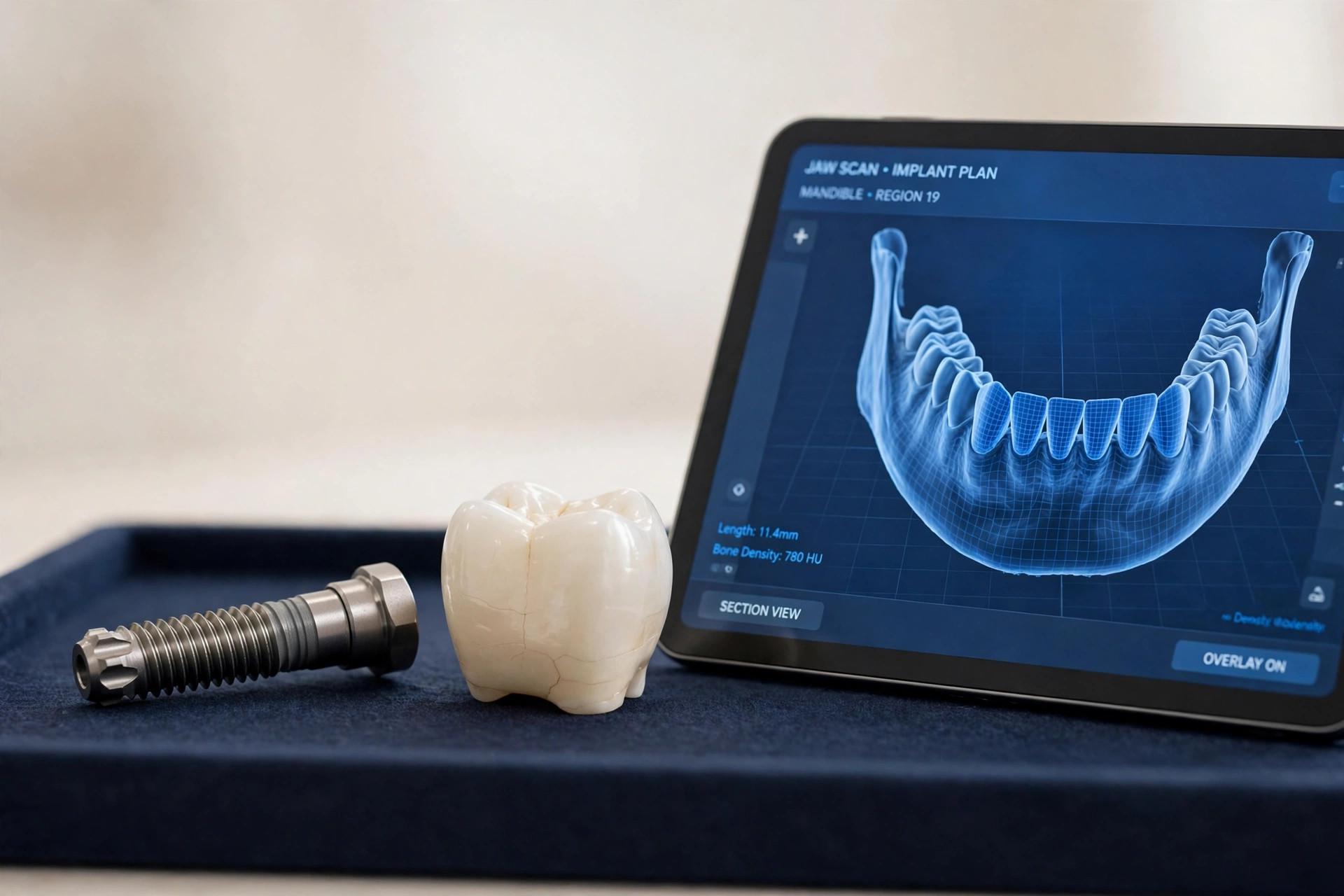
If you carry dental insurance in Dallas–Fort Worth and you need an implant, you have probably heard two opposite stories: “insurance covers implants now” and “insurance pays almost nothing.” Both are half right. Many plans do cover implants — as a major service, at a percentage, under an annual cap that was designed for crowns and cleanings, not five-figure treatment. This guide shows how the coverage actually pays out, with the metro’s real prices attached, and the legal moves that stretch a plan further.
How implant coverage is usually built
- Classified as a major service. Where implants are covered at all, plans commonly pay around 50% after the deductible — the same tier as crowns and bridges on many plans.
- Paid on the allowed amount, not the bill. The percentage applies to the plan’s own fee schedule. If the practice’s fee is higher, the plan’s share is smaller than the headline percentage suggests.
- Capped by the annual maximum. Most plans stop paying at $1,000–$2,000 per person per year. That ceiling, not the percentage, is what limits implant help.
- Split across the parts. The fixture, the abutment and the crown may be billed and paid as separate items, sometimes in different plan years as treatment stages complete.
- Subject to waiting periods and clauses. Major-service waiting periods of 6–12 months are common, and missing-tooth clauses can exclude replacing a tooth lost before coverage began.
The annual maximum, in real DFW math
Take a complete single implant at a published DFW price of $2,500, on a plan that pays 50% of major services with a $1,500 annual maximum. Fifty percent of the bill would be $1,250 — under the cap, so the plan pays about that share (of its allowed amount), and you pay the rest. The same plan against a $20,000 fixed arch pays its $1,500 maximum and stops: real money, and about 7% of the treatment. That is the whole insurance story in one example — meaningful on a tooth, a discount on an arch — and it is why the practices in this metro stack insurance with financing rather than treating it as the payment plan.
| Treatment (published DFW prices) | Price | What a typical $1,500-max plan can pay |
|---|---|---|
| Single implant, complete | $1,800–$3,000 | Up to the annual maximum — a large share of one tooth |
| Implant bridge (2 implants, 3–4 teeth) | $6,000–$12,000 | The annual maximum — a useful first slice |
| Fixed full arch, per arch | $12,000–$25,000 | The annual maximum — a discount, not coverage of the case |
Illustration based on the plan pattern described above (50% major-service coverage, $1,500 annual maximum). Your plan’s terms govern — the practice can pull a written pre-treatment estimate from your insurer before treatment starts.
Four moves that stretch a DFW plan further
1. Get the pre-treatment estimate first. Before surgery, the practice can submit your plan to the insurer and get its payment in writing. Surprises in dental billing almost always trace back to skipping this step.
2. Phase treatment across two plan years. Implant stages naturally span months. Placing implants late in one plan year and crowning them in the next can put two annual maximums to work on one case — the calendar as a financing tool, at no interest. Our DFW financing guide covers phasing in full.
3. Pay your share from an HSA or FSA. Implants are an eligible expense, so your portion can come out of pre-tax dollars — an effective discount equal to your tax bracket.
4. Read the financing terms before you sign for the rest. If you finance the balance, know which kind of promotion you are holding. A plan described as “no interest if paid in full” within a set number of months is usually a deferred-interest plan: interest accrues from the purchase date, and if any balance remains when the window closes, that interest can be charged on the full original amount. That sentence matters more than the monthly payment.
Questions to ask your plan before you book
- Are implants a covered benefit on my plan — and under which category?
- What is my annual maximum, and how much of it have I already used this year?
- Is there a waiting period for major services, and has mine run?
- Does a missing-tooth clause or a downgrade clause apply to my case?
- Will you issue a written pre-treatment estimate for the full case — fixture, abutment and crown?
Then bring the answers to the consultation. A good DFW practice will check your benefits itself and quote your out-of-pocket number in writing. That is the consultation our form arranges — five questions, one practice, an exam and 3D scan, and a complete written quote with your insurance applied first.
Common questions
Does dental insurance cover implants in Dallas–Fort Worth?
Many plans now cover part of implant treatment as a major service — commonly around 50% of the allowed amount after the deductible — but annual maximums of $1,000–$2,000 cap how much that pays in a year. On a complete DFW single implant published from $1,800–$3,000, insurance can cover a real share. On a full arch, it is a discount, not a solution.
Why did my plan pay less than 50% of my implant bill?
Three common reasons: the annual maximum ran out, the plan paid its percentage of its own lower “allowed amount” rather than the practice’s fee, or a downgrade clause paid at the rate of a cheaper alternative treatment. A missing-tooth clause can also deny coverage for a tooth lost before the policy started. Ask the practice to get a written pre-treatment estimate from your plan before surgery.
Is there a waiting period for implant coverage?
Many plans impose a waiting period — often 6 to 12 months — before major services like implants are covered, and some exclude implants entirely. If you are choosing a plan during open enrollment with implants in mind, read the implant line, the major-service waiting period, and the annual maximum before you read the premium.
Does Medicare or Texas Medicaid pay for implants?
Original Medicare generally does not pay for routine dental care, including implants — our Medicare guide explains the narrow exceptions and what Medicare Advantage plans may add. Texas Medicaid’s adult dental benefit is narrow and does not routinely include implants. Do not plan treatment around either without checking your specific coverage in writing.
Skip the guessing. Get the exact number.
Five questions, one local practice, one exact written quote — implant, abutment, crown and fees, in writing, at a free consultation.
Reveal My Estimate →